What is Malaria?
The disease is caused by single-celled parasites of the genus Plasmodium and transmitted to humans by their Anopheles mosquito hosts. Five species infect humans, with P. falciparum being the most dangerous and responsible for the majority of deaths.[24]
Once inside the body, the parasite first colonizes the liver, then invades red blood cells, multiplying rapidly and destroying them. Symptoms are fever, chills, headache, vomiting typically appear 10-15 days after infection.[15]
Why is Malaria serious?
- •It kills fast. P. falciparum can progress to severe disease within 24 hours if untreated[24]
- •It hits the most vulnerable hardest, especially children. According to the World Health Organization (WHO), 75% of malaria deaths are children under five roughly one child dies from malaria every minute.[15]
- •The scale is enormous: Malaria killed more people in Africa than COVID-19 in 2020[13] and in 2024 alone, there were 282 million cases and 610,000 deaths globally.[12]
What the United States did
Environmental modification
The systematic draining and filling of wetlands, swamps, and standing water largely removed the primary breeding habitat for Anopheles mosquitoes.[25]
The filling of wetlands and swamps has since created some detrimental side effects, since they are home to both land and aquatic life[41] and act as natural buffers filtering out water pollutants, protecting shorelines and recharging groundwater aquifers.
Public health infrastructure
Improved housing with window screens is a simple but highly effective preventive measure. Putting in place surveillance and rapid response systems along with administering antimalarial drugs to infected individuals breaks the transmission cycle.
Chemical control
DDT was the game changer in the post-WWII era. Sprayed extensively across the American South and southern Europe in the late 1940s and 1950s, it was extraordinarily effective at collapsing mosquito populations. [25]
The U.S. declared malaria eliminated in 1951, largely due to DDT campaigns combined with other measures.[25] Unfortunately, the DDT that eliminated malaria was found to also have devastating effects on bird populations and ecosystems and was later banned or severely restricted.
Rising living standards meant better housing, healthcare access, and the resources to implement all of the above.
The uncomfortable irony
Many of these solutions aren't transferable to sub-Saharan Africa at the same speed or scale because of cost, infrastructure gaps, and the sheer scale of the problem. Prevention — better housing, screens, doors — might be the more practical solution since past measures to eliminate the mosquito, such as draining wetlands and using DDT, have proved detrimental to the environment, the long-term effects of which are still being felt. So especially moving forward, solutions to save human lives should also reflect consideration for the natural world sustaining them.
And in rural areas where healthcare facilities are scarce, preventive measures as well as knowledge of traditional remedies become crucial to the health of the entire community. Incidentally moringa, while not a cure for malaria, possesses antioxidant and nutritional properties that could help patients regain strength after infection.[7]
Natural Predators

Biological control could complement the other strategies of staving the spread of the Anopheles mosquito, where aquatic insects and other animals prey on the larvae, such as the backswimmer — the apex predator of mosquito larva[1] — who eats an average of 71 larvae per day. Swallows, swifts, and bats are the primary predators of adult mosquitoes, along with dragonflies and damselflies which prey on both larvae and adults alike,[4] reducing mosquito numbers naturally.
Why it is Tricky to Vaccinate against a Parasite
The Plasmodium parasite within a human host produces different antigens at each stage of its life cycle from the liver into the bloodstream and has even evolved strategies to confuse, hide, and misdirect the human immune system, not to mention different species of the parasite could be simultaneously infecting one person.
These factors have posed great challenges to developing a malaria vaccine that could effectively not only attacks the parasite in liver cells and in the bloodstream but also prevents transmission to the next mosquito that feeds on an infected person.
A Few Promising Approaches
- •One licensed malaria vaccine — RTS,S — showed only 36% efficacy in a Phase 3 trial when given to children 5-17 months old as a primary series followed by a booster dose. Another recently approved vaccine — R21 — showed an efficacy of 71% in phase 1/2b.[40]
- •Sanaria has developed its PfSPZ Vaccine: a whole-parasite vaccine using radiation-weakened, purified and cryopreserved sporozoites[13] — the precise life stage of the parasite when it is injected into a human through a mosquito bite. The vaccine has been tested on 1,726 infants, children and adults across 20 clinical trials in 9 countries, reaching over 90% vaccine efficacy against controlled malaria infection in the US, Germany, Mali and Tanzania. A three-dose regimen has also shown efficacy in protection against malaria strains different from the vaccine strain, which has been promising.
- •Researchers are also exploring vaccine strategies that enhance the immune system's natural "engulfing" mechanism with splenic macrophages — cells that patrol the bloodstream and destroy foreign invaders — which have shown a remarkable ability to engulf parasitized red blood cells.[5]
- •Most recently, a 2025 proof-of-concept study applied the same mRNA platform behind the COVID-19 vaccines to blood-stage malaria.[42] Researchers tested two mRNA vaccine versions in mice, both carrying instructions for two malaria surface proteins, which the immune system could learn to target. One mRNA version outperformed the existing protein-based vaccine it was compared against and the second mRNA version outperformed the first, which is very promising, but has yet to be tested on humans.

One Step Forward, One Step Back
Since 2000, some 2.3 billion cases and 14 million deaths have been averted worldwide,[11] a genuine achievement of a collaborative global health effort of prevention through insecticide-treated nets, medicines, malaria vaccines and expanded seasonal chemoprevention reaching 54 million children[12] — a figure that reflects, in no small part, the reach of Tu Youyou's rediscovered compound and artemisinin-based combination therapies.
As of late 2024, 44 countries and one territory have been certified malaria-free by WHO,[17] and 25 of the 83 malaria-endemic countries now report fewer than 10 cases per year[23] — a striking improvement from only 4 such countries in 2000.
Yet the pace of progress has slowed, and the threats from climate change, insecticide and rising drug resistance continue to escalate even as funding for malaria programs has largely plateaued over the past decade.[15]
This means that the disease, as one WHO official observed, can make a comeback with startling speed — as the country of Georgia discovered when malaria returned in the early 2000s after decades of absence, before it reclaimed its elimination status in 2025.[15]
The urgency of preserving both plants and knowledge is sharpened by the scale of the disease artemisinin still confronts. According to WHO's 2025 World Malaria Report, there were an estimated 282 million malaria cases worldwide in 2024, with deaths at 610,000 over the same period[12] — a death toll that stands at more than three times the global target set by the WHO for 2016–2030.
An estimated 95% of those deaths occurred in the WHO African Region,[12] and approximately three quarters of those were children under the age of five.
Within the United States, nine cases of locally acquired malaria were confirmed in Florida and Texas in 2023[6] — the first domestic transmission since 2003.
Triple Threat: Resistance, Resilience, and Climate
The disease has also begun to grow resistance to the currently known and available treatments. Resistance to artemisinin has already been reported on the Thai-Cambodian border, raising concern about its potential spread to Africa, where billions are at risk of malaria each year. Pyrethroid resistance — the class of insecticide used in most treated bed nets — has now been confirmed in 48 countries,[12] reducing the effectiveness of one of the most scalable prevention tools available. This threat of growing resistance gives particular urgency to the search for other antimalarial compounds in traditional pharmacopeias.
In addition, malaria parasites with deletions of the pfhrp2 gene, which conventional rapid diagnostic tests rely upon to detect infection, escape detection and thus undermine reliable diagnosis in the field.[12]
Finally there's Anopheles stephensi — an insecticide-resistant, urban-dwelling mosquito historically found across South Asia and the Middle East[9] — that has invaded nine African countries,[12] introducing malaria into densely populated cities in sub-Saharan Africa where neither clinicians nor public health infrastructure are equipped to handle this species that tolerates heat and drought, and can breed in a bottle cap.
Climate change is also compounding the problem. Altered rainfall and temperature patterns are shifting mosquito habitats and extending transmission seasons, as seen in Ethiopia, which recorded over 7.3 million malaria cases in the first ten months of 2024 alone[22] — the highest number of cases in seven years.
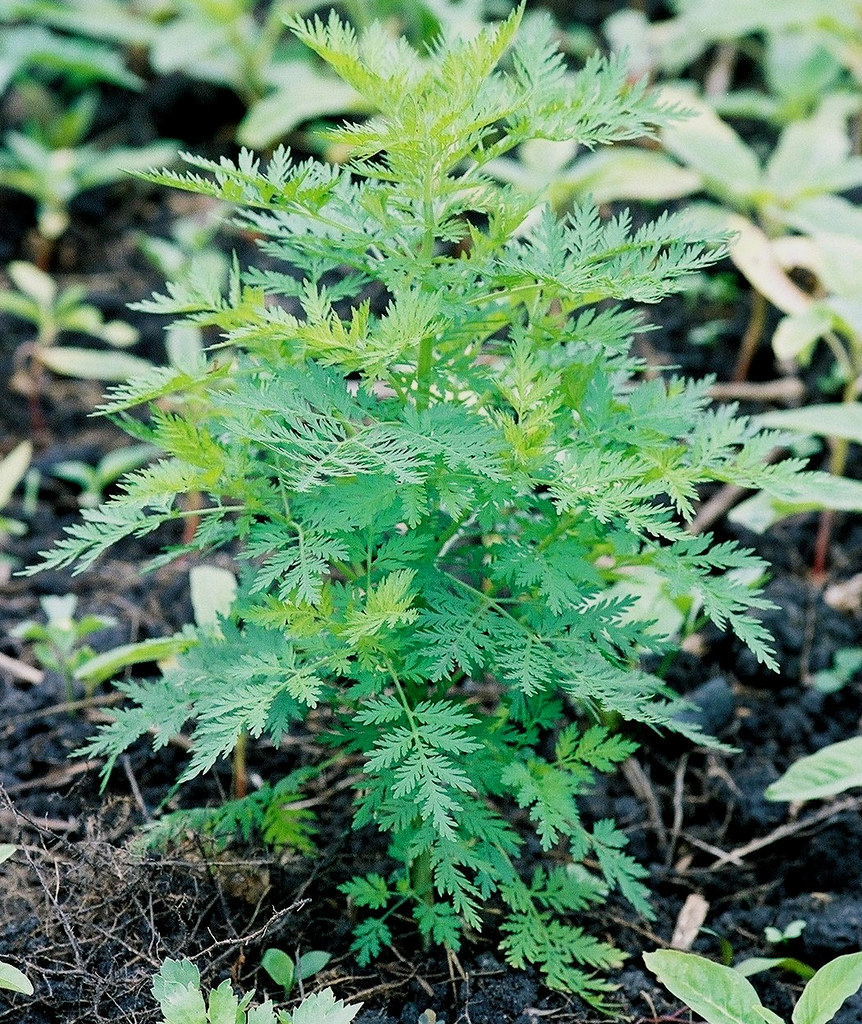
The distance is growing larger between how far the artemisinin compound developed from Tu Youyou's rediscovery has helped treat malaria, and how far there remains to go. But like the parasite itself, a multi-faceted approach to prevention and treatment might just win the day.