One more paragraph…Unfolding the story…Running the presses…Gathering the sources…Binding the chapter…Setting the type…Turning the page…Fetching the dispatch…Retrieving the story…Almost there…
Part I — Ancient Answers to Modern Problems: Malaria and Microplastics | Beyond the Times
The solutions are already out there. We're here to report them.
Saturday, July 11, 2026
Science
Part I — Ancient Answers to Modern Problems: Malaria and Microplastics
Some of the solutions we seek may be hiding in plain sight.
QG
This article was researched and source-verified with AI assistance.
When the cure is already written: ancient knowledge meets modern crises
In a São Paulo laboratory in early 2026, researchers watched microplastic particles clump together and fall out of suspension. The agent doing the work was not a novel polymer or a patented chemical but a saline extract from the seeds of Moringa oleifera, a tree whose water-clarifying properties were known to ancient Egyptians. [36] In tests on aged polyvinyl chloride microplastics, the extract removed up to 98% of contaminants from drinking water, matching aluminum sulfate in neutral conditions and outperforming it in alkaline water. [25]
The scale of the microplastics problem provides important context for understanding why the moringa discovery carries such practical urgency. An estimated 10 to 40 million metric tons of microplastic particles are released into the environment every year, a figure that could double by 2040 if current trends continue. [7]
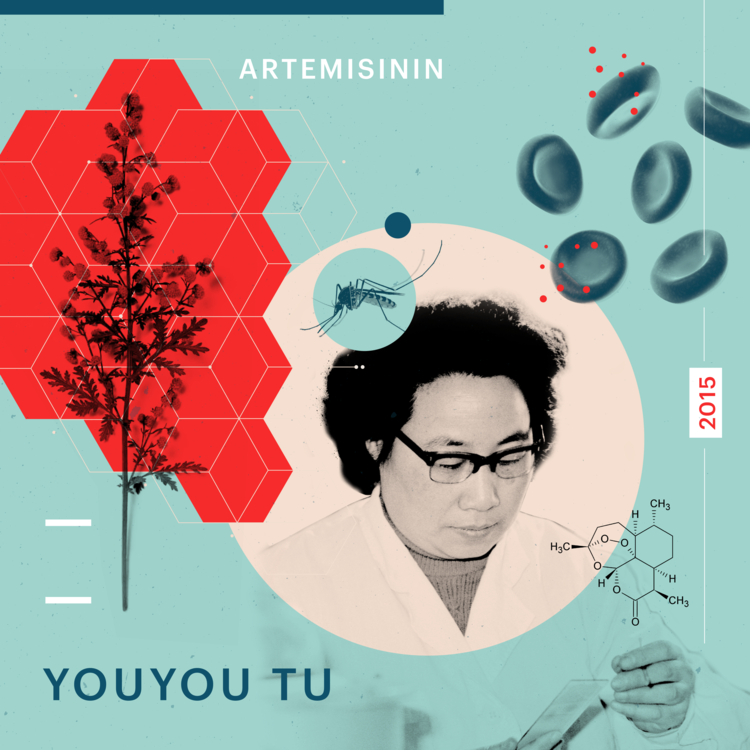
Six decades earlier and four thousand miles away, a Chinese pharmacologist named Tu Youyou had arrived at a similar moment of recognition in combatting malaria, a parasitic disease transmitted to humans through the bites of infected female Anopheles mosquitoes.
After her team had screened more than 2,000 traditional recipes and tested extracts from over 100 plants without finding a stable antimalarial compound, Tu returned to a fourth-century manuscript by the Jin dynasty physician Ge Hong. The text instructed readers to immerse sweet wormwood in water, then "wring out the juice and drink it all." Tu realized her team had been boiling away the active ingredient. She switched to a low-temperature ether extraction, and on October 4, 1971, sample #191 inhibited rodent and monkey malaria parasites at 100 percent.
That extract became artemisinin. Since 2000, more than a billion artemisinin-based treatment courses have been administered to malaria patients, according to the World Health Organization (WHO). [2] In 2015 Tu received the Nobel Prize in Physiology or Medicine at the age of 84, [45] the first mainland Chinese scientist to receive a Nobel Prize in a scientific category. [4]
Both Tu Youyou and the Brazilian researchers found ancient answers to two serious modern problems. The pattern is worth pausing over. In an era saturated with novelty — synthetic chemistry, high-throughput screening (HTS) (where automated systems test large numbers of compounds and screen those producing the desired effect) and machine-learning drug discovery — two of the more striking recent answers to malaria and microplastic pollution were drawn, at least in part, from ancient texts and practices.
But those texts exist only because communities observed the natural world carefully over centuries and recorded what they found. What follows is, in part, a story about what happens when that accumulated attention is brought to bear on a crisis — and what may be lost if the knowledge, and the biodiversity underlying it, are not preserved.
She was not the obvious candidate
"In the hands of each rests the salvation of all." — Antoine de Saint-Exupéry
She was not the obvious candidate. Tu Youyou held no doctorate, no medical degree, and had never trained abroad. [4] Born in 1930 in Ningbo, Tu Youyou had contracted tuberculosis at age 16, forcing her to take a two-year break from school. After recovering, Tu was determined to find cures for serious diseases like the TB that had afflicted her.
At Beijing Medical College, Tu studied pharmacology, learning how to classify and extract active ingredients from medicinal plants. [4] Upon graduation, Tu was assigned to work at the newly established Academy of Traditional Chinese Medicine, where she took a four-year course in traditional Chinese medicine for researchers trained in modern Western methods.
A secret project and a 1,700-year-old recipe
Tu's discovery emerged from one of the more improbable institutional contexts in modern science. In 1967, at the height of the Cultural Revolution, when most of China's universities and research institutes were shuttered, Chairman Mao Zedong launched a covert military research program called Project 523. [2] The goal was urgent: North Vietnamese troops were losing more soldiers to malaria than to bullets, and the standard treatment, chloroquine, was failing as the parasite developed resistance.
Tu, then a 39-year-old researcher, was appointed to lead a team in 1969. Before her team's involvement, more than 240,000 compounds had already been tested worldwide without success. [4] Her approach was different: she and her colleagues combed ancient Chinese medical texts and folk manuals, eventually compiling 640 candidate recipes and narrowing the field to 380 herb extracts for testing on malaria-infected mice. [50]
She also traveled to remote parts of China, including the southern island of Hainan, to collect potential remedies and study how malaria threatened human health firsthand. Louis Miller, at the U.S. National Institute of Allergy and Infectious Diseases, later noted that many scientists would have abandoned the project when early tests showed mixed results. "Many people would have dropped and looked for other things," he told the Lasker Foundation, "but she persevered until she had something that worked 100 percent." [2]
Sweet wormwood (Artemisia annua) appears in a fourth-century Chinese text for treating fevers. But the real breakthrough came from a closer reading of Ge Hong's A Handbook of Prescriptions for Emergencies, which described preparing the herb in cold water rather than boiling it. Heat, Tu realized, was destroying the compound. [50]
When promising results emerged in animals, Tu volunteered herself as the first human test subject. "As the head of the research group, I had the responsibility," she later told Chinese media. A clinical trial of 21 patients on Hainan Island in August 1972 achieved 95% to 100% parasite inhibition. [50]
Because of Cultural Revolution restrictions, the first Chinese-language paper on artemisinin was not published until 1977, and the first English-language paper not until 1982. [2] For decades, the papers she contributed to were published anonymously, and her name remained largely unknown outside a small circle of researchers. When the Nobel Prize in Physiology or Medicine was finally awarded to Tu Youyou in 2015, the 84-year-old made a point of crediting everyone involved. "The discovery of artemisinin was an example of successful collective efforts," she told Xinhua. "It is a gift that traditional Chinese medicine has for the world."
Tu's team also produced a derivative that extended the drug's power in ways that received little attention at the time. After isolating artemisinin, Tu and her colleagues modified the compound to generate dihydroartemisinin, which proved to have ten times the killing power of artemisinin itself and additionally reduced the risk of reinfection [33] — a refinement that would shape the architecture of combination therapies developed in subsequent decades. That combination approach, in which an artemisinin derivative is paired with a second drug targeting the parasite through a different mechanism, became the standard WHO-recommended treatment for uncomplicated malaria.
The drug's reach has continued to grow in unexpected directions. In 2024, Stanford Medicine researchers reported that artesunate, an artemisinin derivative, can partially reverse cardiac fibrosis — a stiffening of heart tissue underlying many cardiovascular diseases — through a molecular pathway entirely separate from its antimalarial action. [41] The compound exists in today's screening libraries only because Tu rediscovered it half a century ago — and because Ge Hong recorded a preparation method approximately 1,700 years before that.
The tree that cleans water
The moringa story has a different shape but a similar arc. Moringa oleifera, a tree native to India and now cultivated across the tropics, has long been used as food and traditional medicine, as well as a water-purification agent. Historical accounts suggest ancient Egyptians used moringa seeds to clarify turbid water. [36]
What Brazilian researchers at the Institute of Science and Technology of São Paulo State University added, in a study published in ACS Omega in 2026, [25] was rigorous validation against a distinctly modern pollutant: aged PVC microplastics. Lead author Gabrielle Batista and her colleagues compared a saline extract of moringa seeds against aluminum sulfate — the standard compound used in municipal water treatment — in an in-line filtration system. The mechanism is electrochemical: microplastics carry a negative charge that causes them to repel one another and resist filtration; coagulants neutralize that charge, allowing particles to clump into clusters that sand filters can capture.
In neutral water, the two performed similarly. [25] In alkaline water — common in many natural sources — the moringa extract outperformed aluminum sulfate. The researchers measured results using scanning electron microscopes to count particles and a high-speed camera with laser measurements to analyze cluster sizes.
And while aluminum- and iron-based compounds face growing concern over their biodegradability, residual toxicity, and disease risk, [25] moringa is a non-toxic tree that grows rapidly, resists drought, thrives in poor soils, acts as a carbon sink, and produces seeds that can be processed into an extract at home with no industrial refining. The researchers describe the method as most promising for small-scale and rural applications, with further work needed to scale to city infrastructures.
Microplastics — plastic particles smaller than five millimeters — have accumulated in global water systems for decades from sources including tire wear, synthetic textiles, and degraded packaging, and can pass through intestinal walls into the bloodstream, potentially contributing to cancer, heart disease and reproductive issues. [36]
Old remedies meet new rigor
Lu Aiping, dean of Chinese medicine at Hong Kong Baptist University, has expressed hope that Tu Youyou's recognition will encourage researchers to explore traditional herbal medicine for new drugs, citing salvianolic acid A from the danshen plant and ligustrazine, which show promise for heart disease. [2]
Whether modern drug or ancient medicine, both need to go through the same rigorous and extensive testing by the scientific tools currently available. Tu's breakthrough required modern extraction chemistry, mouse models, and clinical trials; the moringa study depended on electron microscopy and controlled comparison with industrial standards. What they do suggest is that the archive of human attention to the natural world — accumulated over centuries by people watching what plants did in water, in wounds, in fevers — remains an underused resource.
Drawing from traditional plant medicine
The moringa research also sits within a broader institutional effort to bring rigorous scientific standards to the study of traditional plant medicines. At the Royal Botanic Gardens, Kew, researcher Monique Simmonds, who heads the Good Practice in Traditional Chinese Medicine Research Association [37] — an organization now involving 112 institutions across 24 countries — works to improve replication standards (so scientists repeating an experiment can reliably reproduce the same results) by developing better research guidelines, including recommending consultation with taxonomists to independently verify which plants — and which parts of those plants — are being used in any given study. At Kew, the taxonomic work is accelerated by machine learning and high-throughput mass spectrometry capable of revealing the chemical structures of plant compounds, with the goal of identifying structures that might be useful for drug development.
The same institution that holds one of the world's largest botanical collections is also building one of the world's most systematic programs for reading what those collections contain.
At Harvard Medical School's Department of Systems Biology, Timothy Mitchison has pointed out that traditional Chinese medicine-derived compounds, which often show poor pharmacology by modern drug standards — breaking down too quickly in the bloodstream or not absorbing well into the body, may in fact be signaling something useful. A compound that breaks down quickly could indicate high action in the liver or kidney, [37] while one that does not absorb well through the stomach might point toward a gut condition — properties potentially valuable for targeting gastrointestinal conditions specifically. Furthermore, the long history of human use of these compounds, Mitchison argues, may itself be "the most valuable thing you can get to help characterize any drug."
It is no surprise that a Harvard study published in Current Biology found the regions possessing "rich local knowledge" also have the longest histories of human settlement [60] — particularly India, Nepal, Myanmar, and China show disproportionately high densities of medicinal plant use compared to the regions' overall plant diversity. However, the study's authors also noted that much of this knowledge "has not yet been systematically recorded or incorporated into global databases" and called for prioritizing such regions in the conservation and the revitalization of traditional knowledge that could benefit public health.
Today, around 40% of pharmaceutical products draw on nature and traditional knowledge, according to WHO figures, [22] including landmark drugs such as aspirin, artemisinin, and childhood cancer treatments. At least 25% of modern prescription drugs contain ingredients derived from plants. [60] That proportion hints at how much of what already works in modern medicine traces its origins to someone, somewhere, watching what a plant did — and writing it down.
Other successes in traditional medicine research
At Yale School of Medicine, pharmacology professor Yung-Chi Cheng has spent more than two decades developing YIV-906, a drug derived from an 1,800-year-old Chinese treatment for stomach ailments called Huang Qin Tang, [17] which combined licorice, dates, peonies and skullcap, traditionally prepared as a tea. A researcher at Yale's Sterling Memorial Library traced the formulation through ancient Chinese texts. In laboratory testing, the preparation not only reduced the gastrointestinal side effects of the chemotherapy drug irinotecan but enhanced its anti-tumor activity. Across more than 200 patients in multiple human studies, YIV-906 consistently reduced chemotherapy's toxic effects while stabilizing cancer and extending survival. A 2019 study found that combining it with an immunotherapy drug eliminated all tumors in mice and prevented new ones from taking hold — what the researchers described as a "tumor-specific vaccine-like effect." The drug is now entering the first international clinical trial for a botanical cancer treatment, spanning 20 institutions across the United States, China, Taiwan and Hong Kong.
The renaissance of interest in ancient remedies has reached beyond China. Polish researchers recently reconstructed theriac — a black, sticky compound assembled from dozens of ingredients including opium and viper flesh, used across Europe and the Near East for nearly two thousand years as a remedy against poison, plague, and general illness [14] — from a seventeenth-century apothecary recipe. Working with pharmacists at the University of Wrocław, the team boiled, mixed, and dried the components over two days, producing a molasses-like preparation that would historically have been divided into pills. It was the first time researchers with a pharmaceutical background had attempted a complete reconstruction and analysis of theriac (an antidote to snake venom and other poisons), and their goal was to assess which of its many ingredients — several known to have genuine therapeutic properties — might account for the remedy's millennia-long reputation.
A similar logic is driving renewed attention to medieval European medicine, which has been comparatively neglected. Methicillin-resistant Staphylococcus aureus — MRSA, the antibiotic-resistant superbug that once in the bloodstream could trigger sepsis and cause death within 24 to 72 hours — may have met an unlikely adversary in a tenth-century Anglo-Saxon medical compendium called Bald's Leechbook, currently at the British Library. [42]
In 2015, researchers from the University of Nottingham and Texas Tech University reconstructed one of its remedies and tested it against the bacterium. [42] The recipe, presented as a treatment for styes, called for garlic, leek, onion, honey, and bile from a slaughtered cow — with wine also featuring in the original Anglo-Saxon text — brewed for nine days in a brass vessel. [23] When the team followed the instructions precisely — including the nine-day waiting period — the resulting potion killed 90% of MRSA on infected mouse tissue, performing comparably to vancomycin, the last-resort antibiotic currently reserved for serious MRSA infections.
Following the recipe exactly proved essential: another group had attempted to recreate the remedy in 2005 and failed. [23] The finding is now informing a broader research program into medieval texts as potential sources for new antibiotics, at a moment when resistance to existing drugs is accelerating.
Medicinal plants and the human record of them
The social geography of where knowledge is held adds another dimension to what is at stake. Ethnobotanist Daniel Moerman's studies of Native American medicinal plant use found that indigenous communities had identified medicinal uses for plant families at rates far exceeding chance, suggesting that centuries of empirical observation had resulted in the passing down of a natural pharmacopeia.[6] The communities with the deepest reservoirs of botanical knowledge are frequently the same communities facing the greatest pressures from habitat destruction, economic marginalization, and the attrition of oral tradition as younger generations move to cities. The loss is not only ecological but epistemic — when a language dies, the precise descriptive vocabulary for plant preparations, dosages, and seasonal variations in potency often goes with it, leaving behind only partial transcriptions that later researchers must struggle to interpret.
What all of these cases share is a dependence on two conditions that cannot be taken for granted: the survival of recorded knowledge, and the survival of the plants themselves. The Moringa tree has survived both conditions, making its recent rediscovery that much more miraculous.
Ebola virus
Seeking antidotes to the recent viral outbreaks
In light of the current hantavirus and Ebola outbreaks, perhaps more solutions will come from researchers referring back to ancient and traditional knowledge, preserving both the medicinal plants and the traditions that use them.
Though there are more than 150,000 cases per year of hantavirus worldwide, there is currently no FDA-approved vaccine or antiviral therapy for either hantavirus pulmonary syndrome — when the lungs fill with fluid, or hemorrhagic fever with renal syndrome (HFRS) — which causes fever, blood vessel leakage and kidney failure. [12]
The current outbreak is of hantavirus pulmonary syndrome caused by the Andes virus, the only type of hantavirus documented to spread from person to person — typically through close prolonged contact with a symptomatic person. [20]
Several experimental approaches are advancing through animal models and early trials, including a pan-hantavirus polyclonal antibody therapy, SAB-163, which has shown in animal models to protect against multiple strains of hantavirus before and just after exposure to the virus. [19] Such a rapidly producible polyclonal antibody therapy might work well to limit casualties in the critical early stages of an outbreak.
Likewise in the recent Ebola Bundibugyo outbreak, there is currently no vaccine or treatment for the Bundibugyo strain. A vaccine was developed for the Zaire strain, which had caused the West Africa outbreak and trialed successfully in 2015.[63]
As of July 9, 2026, there are over 1,800 confirmed cases in the Democratic Republic of Congo (DRC) and Uganda combined, including over 600 related deaths.[61] While not an airborne disease, Ebola spreads through direct contact with the bodily fluids of an infected person or deceased person,[62] so healthcare workers and family caregivers may be more at risk.
Early symptoms are very similar to the flu: fever, headache, body aches, fatigue and sore throat. Later symptoms include vomiting and diarrhea, and in some cases internal and external bleeding.[64]
Some traditional medicine has been used in response: in the DRC, traditional healers manage Ebola symptoms with herbal preparations and are often reluctant to refer patients to treatment centers. [3]
Public health officials have increasingly recognized that collaborating with traditional healers — particularly in regions where oral tradition and community remain primary — may be essential to effective outbreak containment. In Mali, traditional healers were actively engaged in Ebola epidemic response,[3] and training programs in the DRC taught healers to wear gloves and other protective measures, and to recognize potential Ebola cases and refer them to treatment centers.
Researchers have also recently begun to systematically screen traditional medicinal plants for anti-Ebola activity. So far, extracts of two traditional medicinal plants have been promising — Perilla frutescens, used in traditional East Asian medicine [55], has shown some efficacy in inhibiting Ebola virus entry while the Chinese herb Prunella vulgaris has been shown to enhance the antiviral activity of a monoclonal antibody against Ebola. [29]
Computer models used to screen Indonesian traditional medicinal plant compounds have identified hesperidin, cucurbitacin and two ginsenosides — RH2 and RO — as promising inhibitors of the Ebola nucleoprotein, which is essential for viral replication. [38] The computer models also showed the efficacy of these plant compounds were comparable to a known drug and predicted they were non-toxic to humans.
As researchers race to find treatments for the current hantavirus and Ebola outbreaks, it is possible that, as with Tu Youyou in 1969, someone will find what they need in a text that has been waiting to be read again — provided the plant the text describes still exists, and the community that first observed its properties has had the chance to pass that knowledge on.